|
On this page...
Drawing Standard Toilet Stall Type
A
Drawing
Standard Toilet Stall Type B (Alcove)
Drawing
Alternate Toilet Stall Type C (36" wide)
Drawing
Alternate Toilet Stall Type D (48" wide)
Grab
Bars
Toilet
Stall
Shower Seats
General Guidelines
|
|
Toilet Stalls
If toilet stalls are provided, then at least one
shall be a standard toilet stall complying with Type A or B,
shown below. This stall is required in all new construction, as
well as public accommodations that are being altered.
|
|
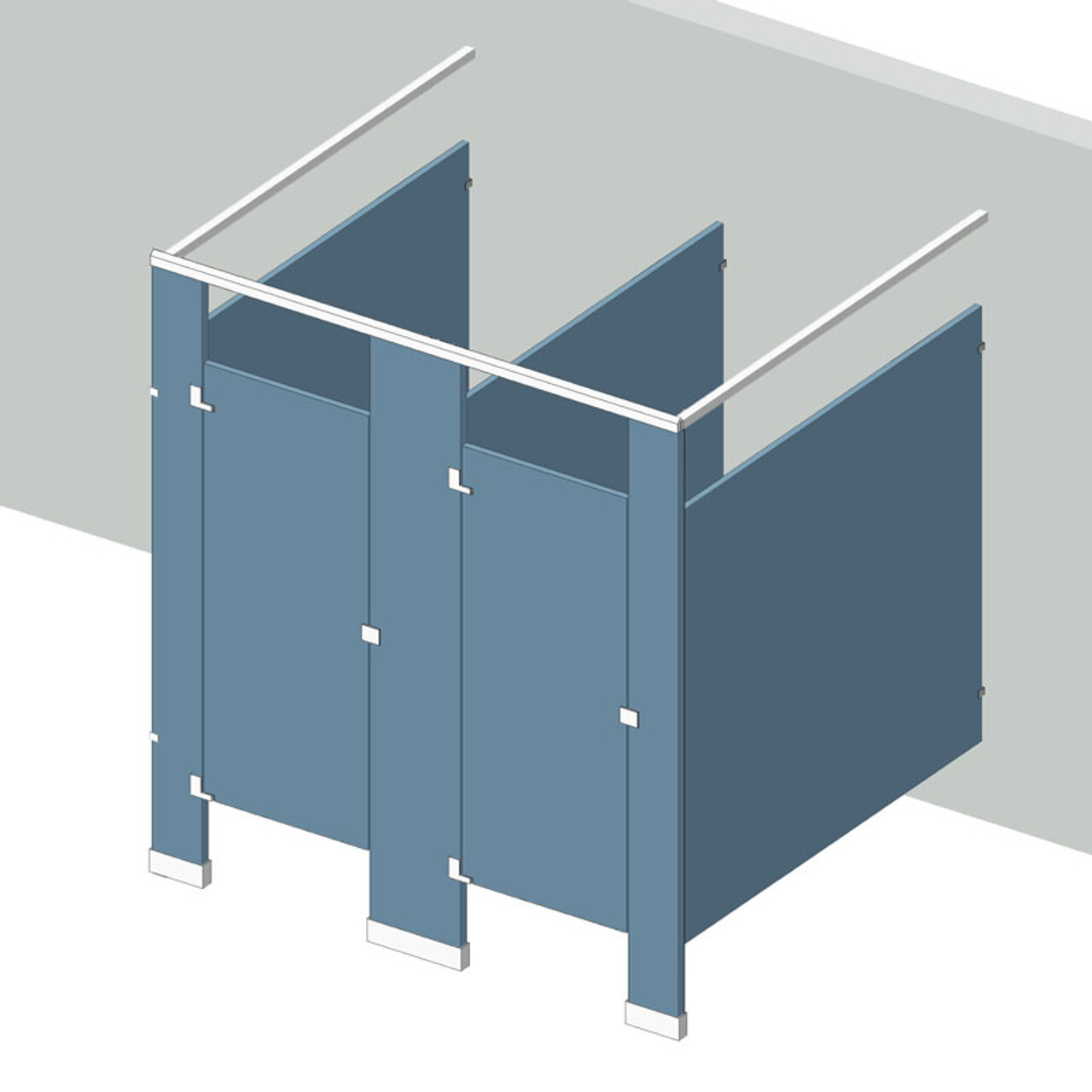
Standard Stalls |
|
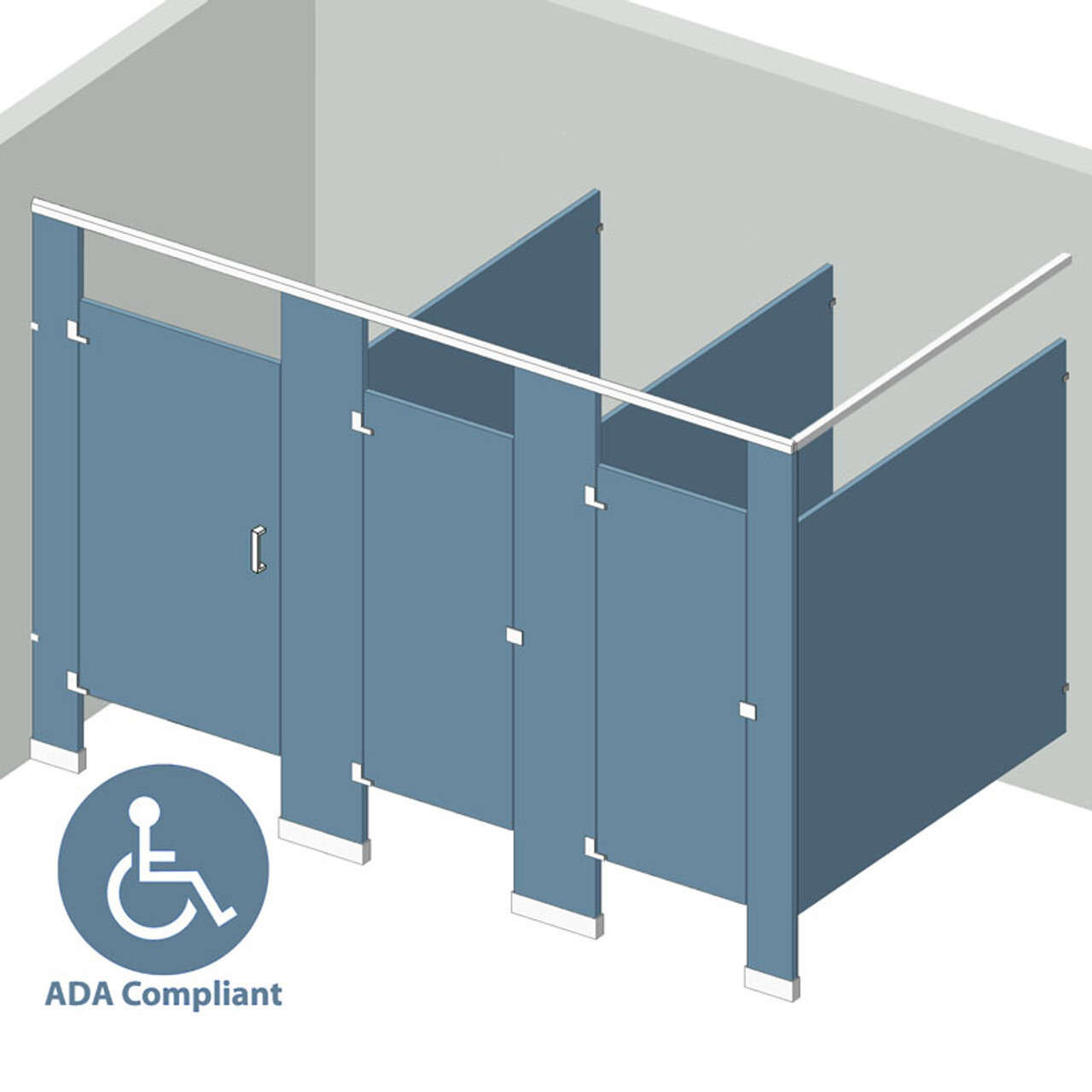
Type A - Standard
Compartment (Wheelchair Accessible) |
 |
-
Minimum width 60" clear
inside
-
Minimum depth 56" with wall
mounted water closet
-
Minimum depth 59" with a
floor mounted water closet
-
Commode to be centered 18"
from either side of stall, with a 32" minimum clear opening
To achieve this, we recommend a
34" out swinging door. The location of the door is most critical
in providing an accessible stall. The door is to be mounted no
more than 4" from the side wall or panel that is opposite
diagonally from the commode. This allows maximum clearance for
the wheelchair to enter and maneuver about.
Back to top of page
|
|
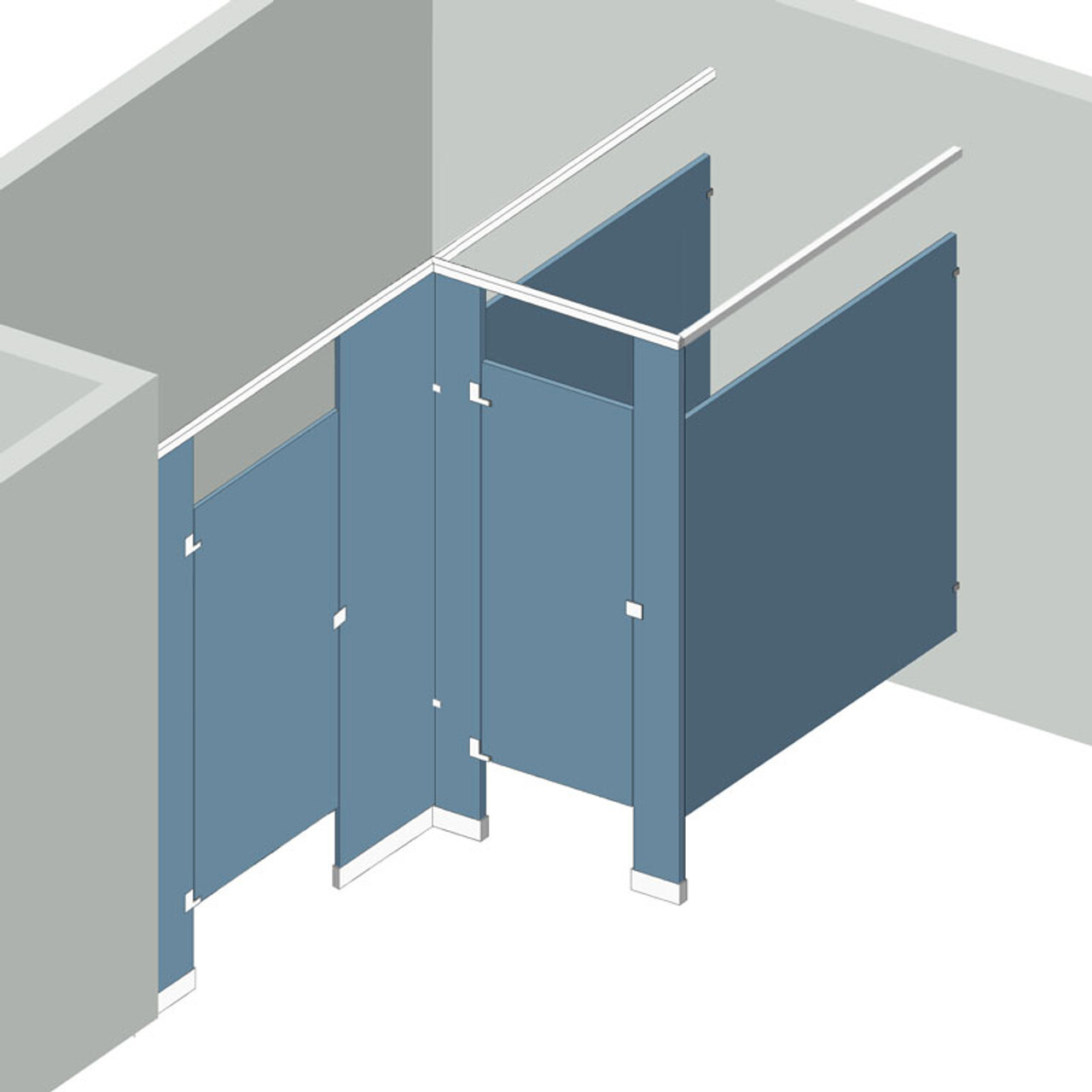
Type B - Standard
Alcove (End-of-Row) Compartment (Wheelchair Accessible) |
 |
|
-
Minimum width 60" clear
opening with 32" clearance on the door
-
Minimum length 92" with
a wall mounted water closet
-
Minimum length 95" with
a floor mounted water closet
-
Commode to be mounted 18" to
the center from the back wall
Here again, a 34" door is
recommended.
Back to top of page |
|
Alternate Stalls |
|
The alternate stalls are used in
alterations where the standard stall is technically infeasible
or where local plumbing codes prohibit reduction in the number
of fixtures.
In alterations, where the standard stall is technically
infeasible or where local plumbing codes prohibit reduction in
the number of fixtures, then the 36" or 48" stalls, Type C or D,
shown below, are permitted.
In large toilet rooms where six or more toilet stalls are
provided, it is required that a 36" wide stall with parallel
grab bars be provided in addition to the standard stall required
in new construction.
Since this stall is primarily intended for use by persons using
canes, crutches and walkers, rather than wheelchairs, the length
of the stall may be conventional. The door, however, must swing
out.
|
|
Type C Alternate
Compartment 36" Wide |

Back to top of page |
|
Type D Alternate
Compartment minimum 48" Wide (Alternate Wheelchair Accessible) |

Back to top of page |
|
Grab Bars Toilet
Stalls
Grab bars complying with the length and
positioning shown below shall be provided. Grab bars may be
mounted with any desired method as long as they have a gripping
surface at the locations shown and do not obstruct the required
clear floor area.
|
|
Size and Spacing of Grab Bars and Handrails.
Many disabled people rely heavily upon grab bars
and handrails to maintain balance and prevent serious falls.
Many people brace their forearms between supports and walls to
give them more leverage and stability in maintaining balance or
for lifting.
The grab bar clearance of 1-1/2" (38 mm)
required in this guideline is a safety clearance to prevent
injuries resulting from arms slipping through the openings. It
also provides adequate gripping room.
The diameter or width of the gripping surfaces of a
handrail or grab bar shall be 1-1/4" to 1-1/2" (32 mm to
38 mm), or the shape shall provide an equivalent gripping
surface.
A handrail or grab bar and any wall or other surface adjacent to
it shall be free of any sharp or abrasive elements. Edges shall
have a minimum radius of 1/8 in (3.2 mm).
|
|

Toilet Stalls
Rear Wall of Standard Stall
|
|
The grab bar on the back wall shall be
36" minimum
in
length, extending from the
wall toward the open side of the water closet,
33"-36"above
the finished
floor. |

Toilet Stalls
Side Grab Bar
|
|
The side grab bar shall be
40"- 42" in length, beginning 12 inches maximum from
the rear wall, 33"- 36" above the finished
floor.
Back to top of page |
|
Shower Seats |
|
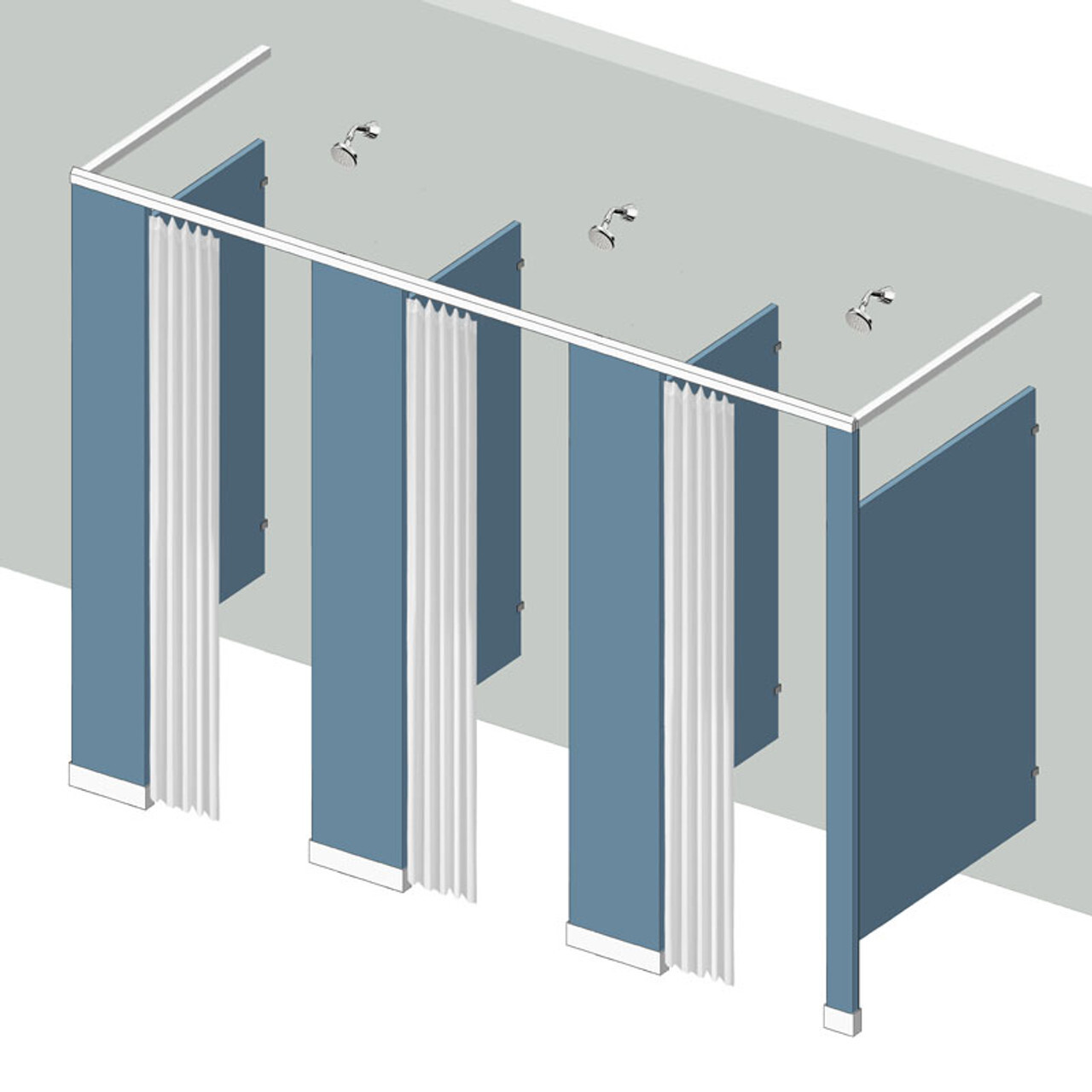
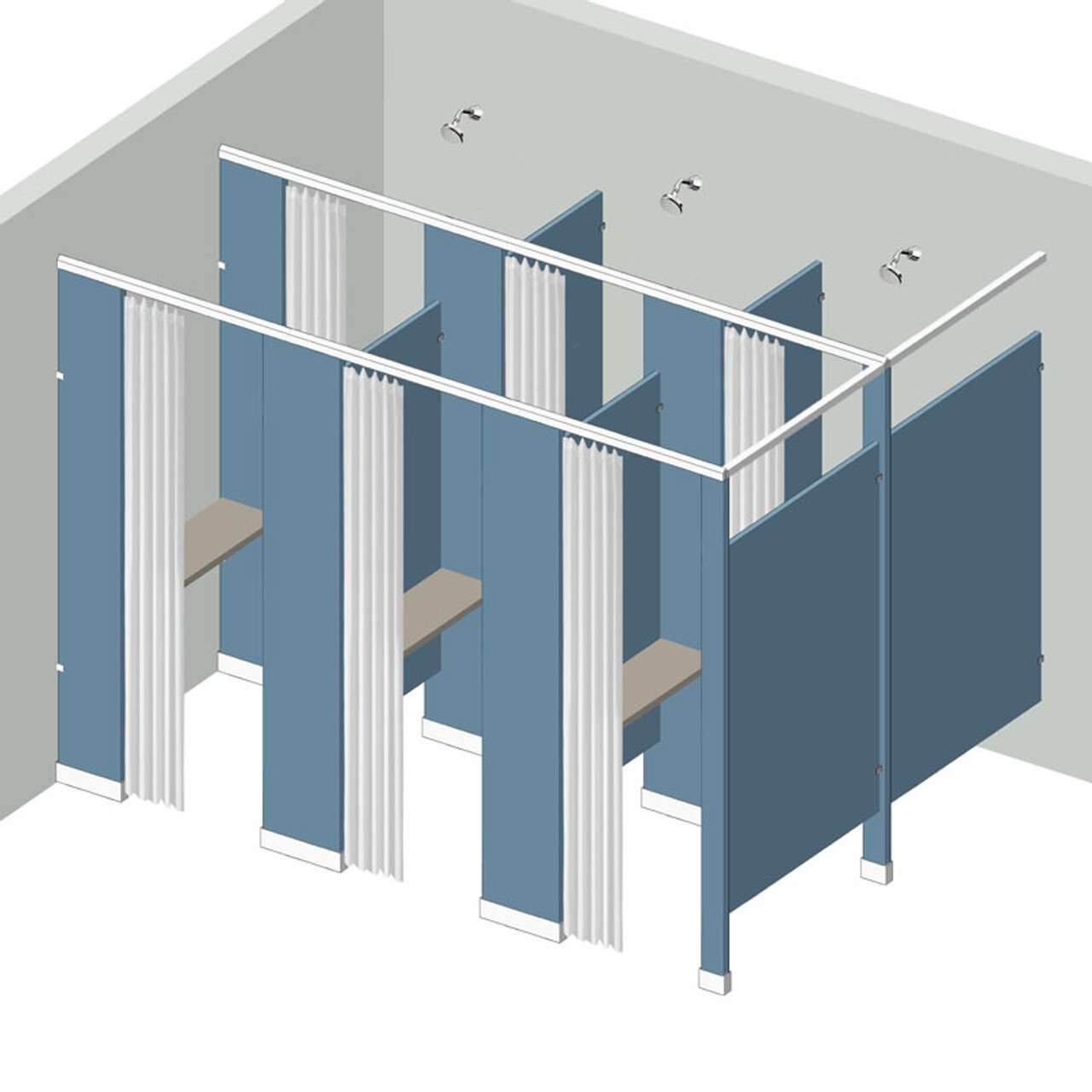
A seat shall be provided in
shower stalls 36" in by 36 " (915 mm by 915 mm) and shall
be as shown below.
The seat shall be mounted 17" to 19" (430 mm to 485 mm) from the
bathroom floor, extend the full depth of the stall and be
located on the wall opposite the controls. |
 |
|
Where a fixed seat is provided in a 30" by 60" minimum
(760 mm by 1525 mm) shower stall, it shall be a folding type and
shall be mounted on the wall adjacent to the controls as shown
below.
|
 |
|
An alternate 36" minimum
by 60" (915 mm by 1220 mm) minimum shower stall is
illustrated below.
The shower seat shall be 24" (610 mm) minimum in length by 16" (330 mm)
minimum in width and may be rectangular in shape. The seat shall
be located next to the opening to the shower and adjacent to the
end wall containing the shower head and controls |
Back to top of page |
|
General Guidelines
"The final rule of the ADA prohibits
discrimination on the basis of disability by private entities in
places of public accommodation and requires that all new places
of public accommodation and commercial facilities be designed
and constructed so as to be readily accessible and useable by
persons with disabilities." |
|
New Construction and Alterations
"The ADA act does not require new
construction or alterations. It simply requires that when a
public accommodation undertakes the construction and alteration
of a facility, the new construction or altered facility must be
made accessible according to the ADA guidelines." |
|
Removal of
Barriers
The act requires the removal of architectural
barriers that are structural in nature in existing facilities
where such removal is readily achievable, i.e. easily
accomplishable and able to be carried out without much
difficulty or expense.
Public accommodation should take measures to provide access to
restroom facilities.
These measures include, for example:
-
Removal of obstructing
furniture or vending machines
-
Widening of doors
-
Installation of ramps
-
Providing accessible signage
-
Widening of toilet stalls
-
Installation of grab bars
Exclusions under these provisions
are any private clubs or religious entities.
Back to top of page |